The Story
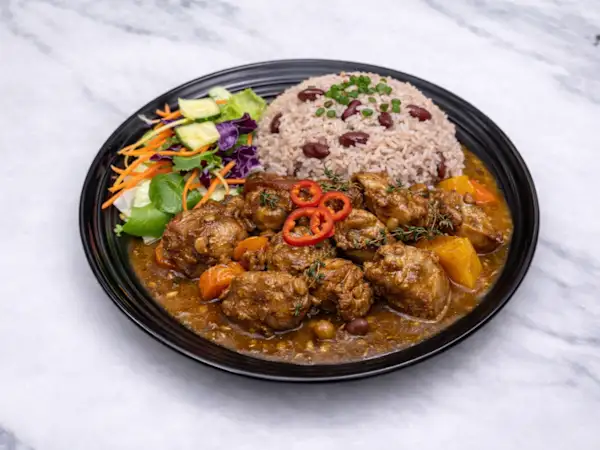
Jamaican Brown Stew Chicken is one of the most enduring dishes in Caribbean cookery, drawing its roots from the rich confluence of African, Taino indigenous, and European culinary traditions that shaped Jamaican food culture across centuries of colonial history. At its core, the technique of "brown stewing" — searing marinated meat in hot oil until deeply coloured, then simmering it low and slow in a seasoned gravy — reflects West African cooking methods brought to the island by enslaved people, who had long mastered the art of extracting deep flavour from every part of an animal through open-fire braising and caramelisation. The marinade itself, built around scallion, thyme, garlic, ginger, and scotch bonnet, is a direct fingerprint of Jamaican culinary heritage, combining African spice traditions with herbs that thrived in the island's tropical soil.
Central to the dish's iconic dark colour is browning sauce — a distinctly Caribbean condiment made by cooking cane sugar until it caramelises to a near-black, bittersweet syrup, then blending it with water and seasoning. This technique of burnt-sugar caramelisation predates the commercial bottled versions sold today, and has long roots in Caribbean kitchens across the islands. Grace Foods, a Jamaican company with over a century of history, became the most recognised producer of bottled browning, cementing it as a pantry staple across the Caribbean diaspora. Browning is not simply a colorant — it adds a deep, bittersweet umami that distinguishes Caribbean stewed meats from all similar preparations elsewhere in the world.
Brown Stew Chicken has always been more than a recipe — it is a ritual. In Jamaican households it is most closely associated with Sunday dinner, a weekly tradition that carries profound cultural weight, tracing back to the rhythms of plantation life where Sunday was the one day of relative rest. It spread internationally through Jamaica's migration waves to the United Kingdom from the 1950s onward — part of the Windrush generation's culinary inheritance — and became a defining feature of Caribbean diaspora cooking in London, Toronto, and New York. Every household carries its own version; the precise ratio of scotch bonnet, the depth of the browning. Those small differences are, in themselves, a form of cultural memory.