The Story
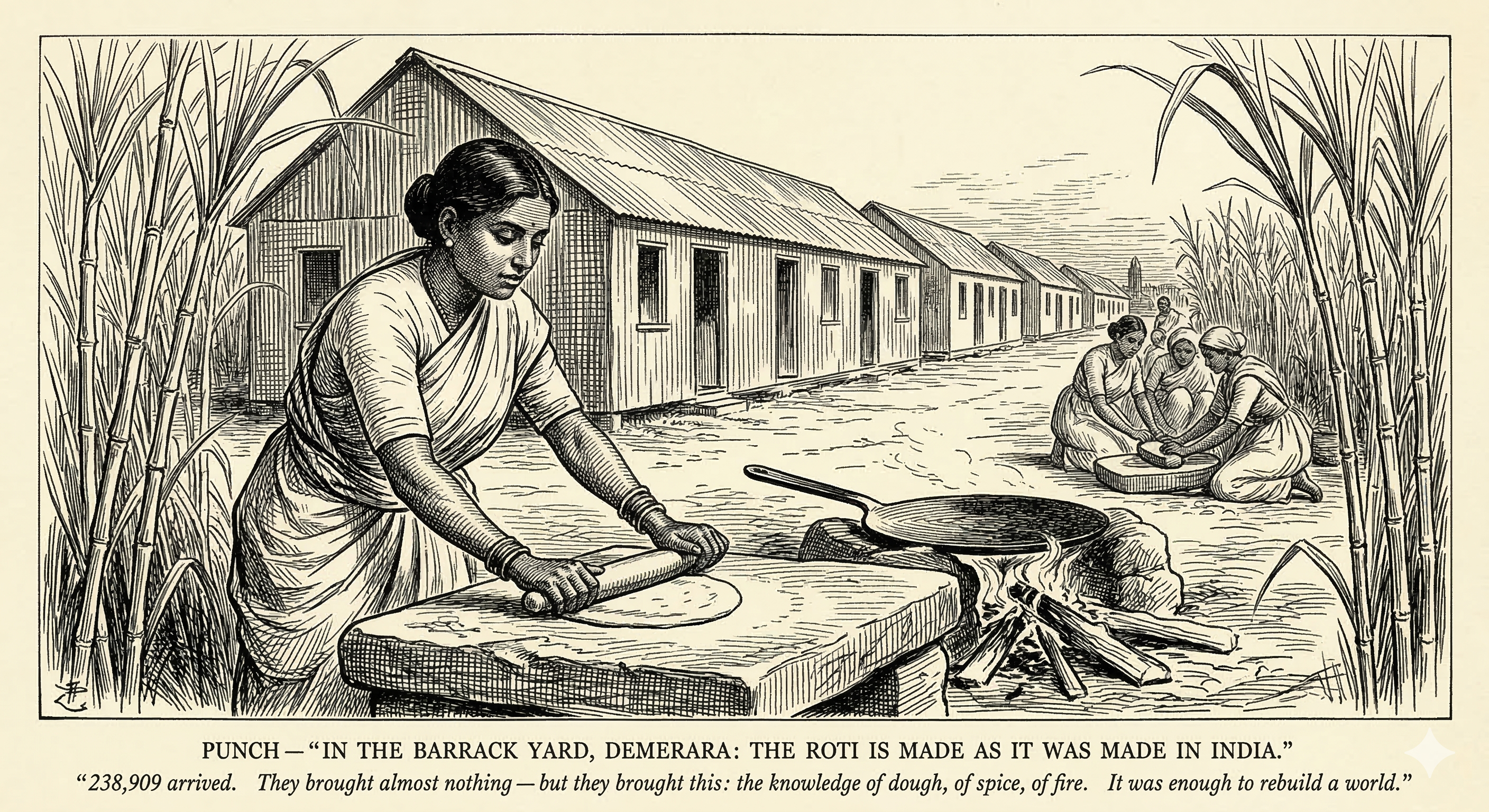
The roti and curry eaten in Guyana today is the direct culinary legacy of one of history's largest forced labour migrations. On May 5, 1838 — the same year British Guiana's "apprenticeship" period ended — the sailing ships Whitby and Hesperus docked in Georgetown carrying 396 Indian indentured labourers, the first of what would become a wave of 238,909 people arriving from India over the next 79 years. They came overwhelmingly from the Bhojpur and Awadh regions of present-day Uttar Pradesh, Bihar, and Jharkhand — 85% Hindu, 15% Muslim — departing through the port of Calcutta under contracts that bound them to plantation labour in conditions many historians have described as a new form of slavery. They arrived with almost nothing, but among what they carried was a complete culinary vocabulary: the knowledge of how to make roti, how to grind and temper spices, how to cook dhal, how to use turmeric, cumin, and coriander to transform even sparse vegetables into deeply flavoured food.
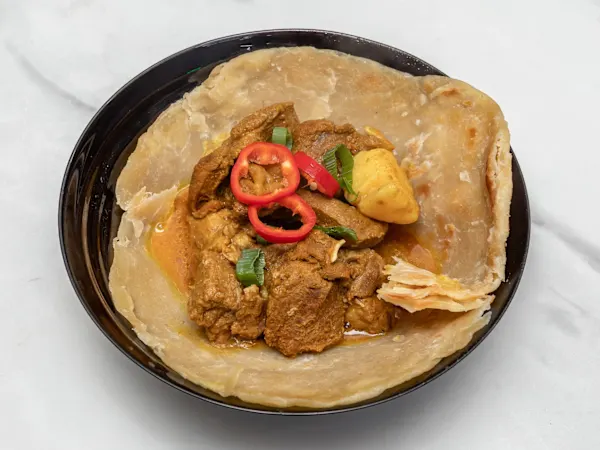
Guyanese roti diverged from its Indian antecedents through decades of creative adaptation shaped by the realities of plantation life and the produce of a tropical country. The paratha roti — known in Guyana as "oil roti" — is made by layering the dough with oil or ghee, folding and rolling repeatedly to create a soft, flaky, laminated flatbread that tears into silky sheets and wraps around curry brilliantly. It is closely related to the Indian paratha but has developed its own Guyanese character in tenderness, thickness, and the way it is "clapped" — beaten between the palms after cooking to separate its layers. The curry that accompanies it is built on a North Indian spice base, but adapted over generations to incorporate local ingredients: wiri wiri peppers, shadow beni (culantro), and the rich, layered taste of Guyanese masala.
Today, Indo-Guyanese represent approximately 44–50% of Guyana's population — the country's largest ethnic group — and roti with curry is not simply ethnic food: it is a national institution. The most ceremonially significant expression of this tradition is "Seven Curry," served exclusively at Hindu religious functions and weddings — seven different curries presented in a water lily leaf, eaten by hand. That sacred dimension reminds us that roti and curry in Guyana is not just sustenance. It is an act of cultural survival, cooked by communities who were stripped of almost everything and rebuilt their world one meal at a time.