The Story
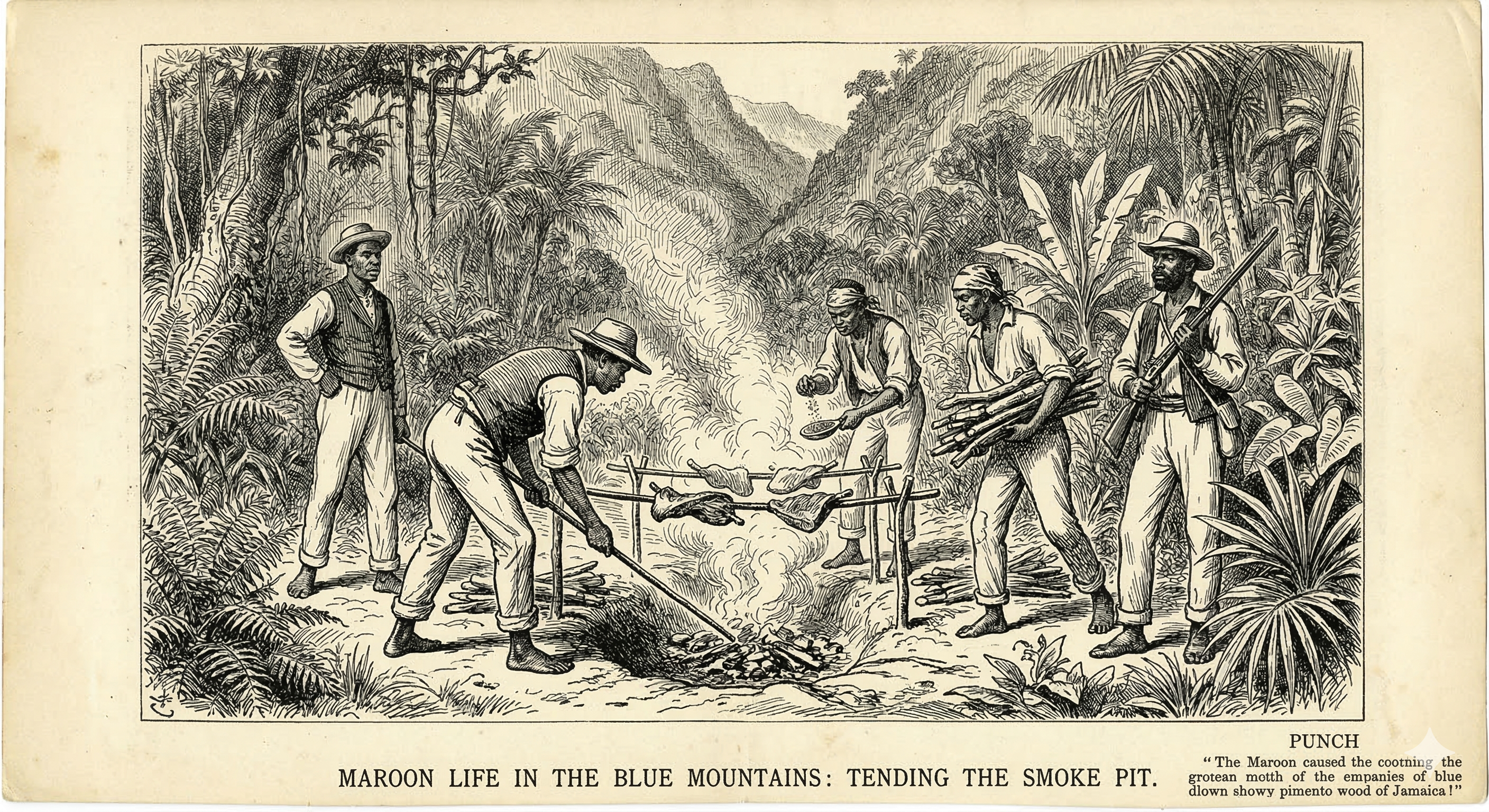
The Maroon people of Jamaica — escaped enslaved Africans who fled to the Blue Mountains in the 17th century — developed jerk cooking as both a preservation and survival technique. Hunted by British soldiers, they could not afford open fires that produced visible smoke. Instead, they seasoned wild boar with allspice (pimento), scotch bonnet peppers, and native herbs, then slow-smoked the meat in sealed underground pits over pimento wood — creating intense flavour while keeping the fire invisible. The word "jerk" is believed to derive from the Spanish "charqui" (dried meat) or from the Quechua word for preserved llama.
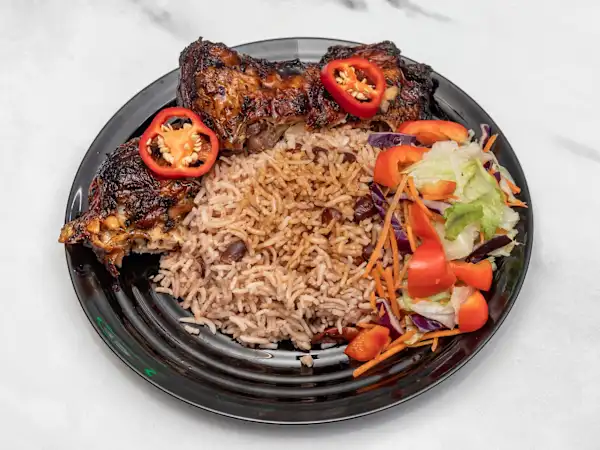
When the British colonised Jamaica, the tradition absorbed new influences — chicken replaced boar as the most accessible meat, and the marinade evolved over centuries to include thyme, garlic, fresh ginger, cinnamon, and dark soy. The drum pan — a halved oil barrel converted into a grill — replaced the earth pit on roadsides across the island. Boston Beach in Portland became the spiritual home of jerk, and its pit-masters became legends.
Today, jerk chicken is Jamaica's most exported cultural treasure — recognised, imitated, and beloved worldwide, yet impossible to truly replicate without the pimento wood, the scotch bonnet, and the patience. Ours is marinated overnight, every night, without exception.