The Story
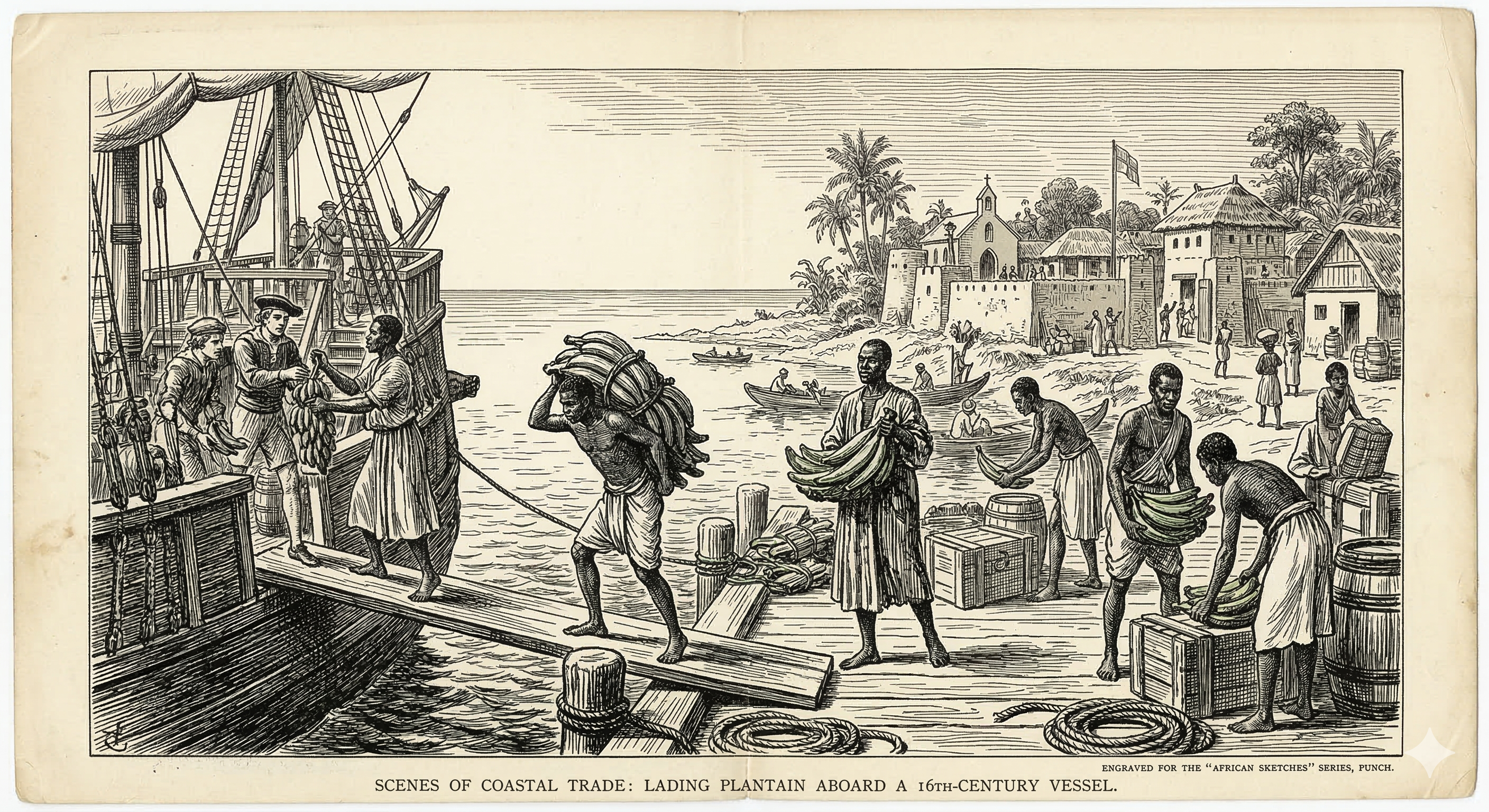
Plantains arrived in the Caribbean from West Africa, carried by enslaved people during the transatlantic slave trade from the 16th century onward. Unlike bananas, plantains are starchy and must be cooked — they are never eaten raw. In West African culinary tradition, fried plantain — known as "kelewele" in Ghana and "dodo" in Nigeria — was already deeply embedded as a household staple, and it translated seamlessly to the Caribbean soil. As the fruit ripens, its starches convert to natural sugars, and when laid in hot oil, those sugars caramelise into the blistered, golden exterior that makes sweet plantain so irresistible.
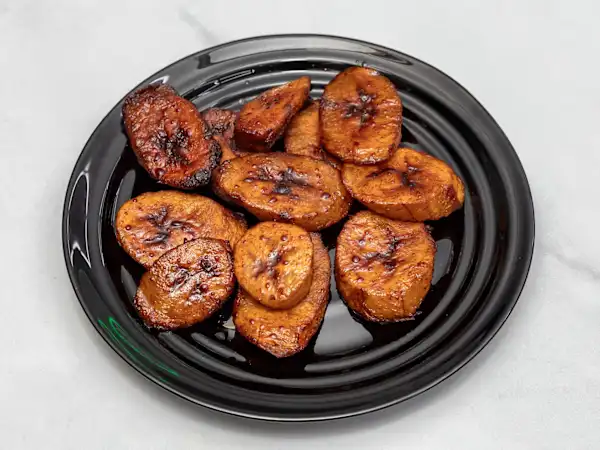
Ripeness is everything. An unripe plantain fries starchy and stiff — useful as tostones in Cuban cuisine, but not what we're after. We wait until the skin is nearly black, the fruit heavy with sugar, before it ever touches the pan. That patience transforms a simple side into something almost dessert-like: crisp at the edges, yielding at the centre, with a depth of caramelised sweetness that no other cooking method can replicate.
Across the Caribbean and West African diaspora — from Kingston to Accra to London — fried plantain is the universal love language of the table. It belongs beside jerk chicken, beside curry goat, beside rice and peas. No plate at The Jerk Shac is truly complete without it.