The Story
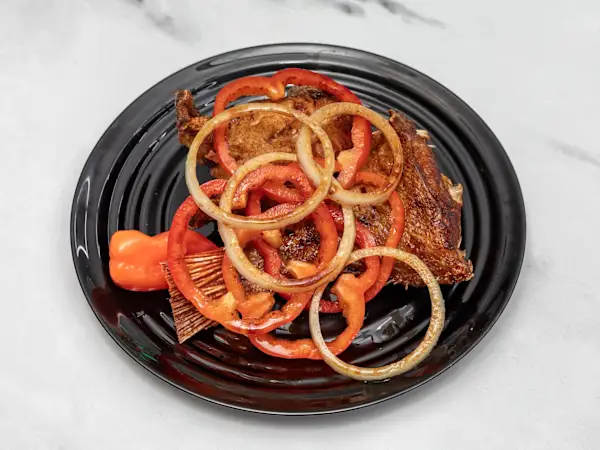
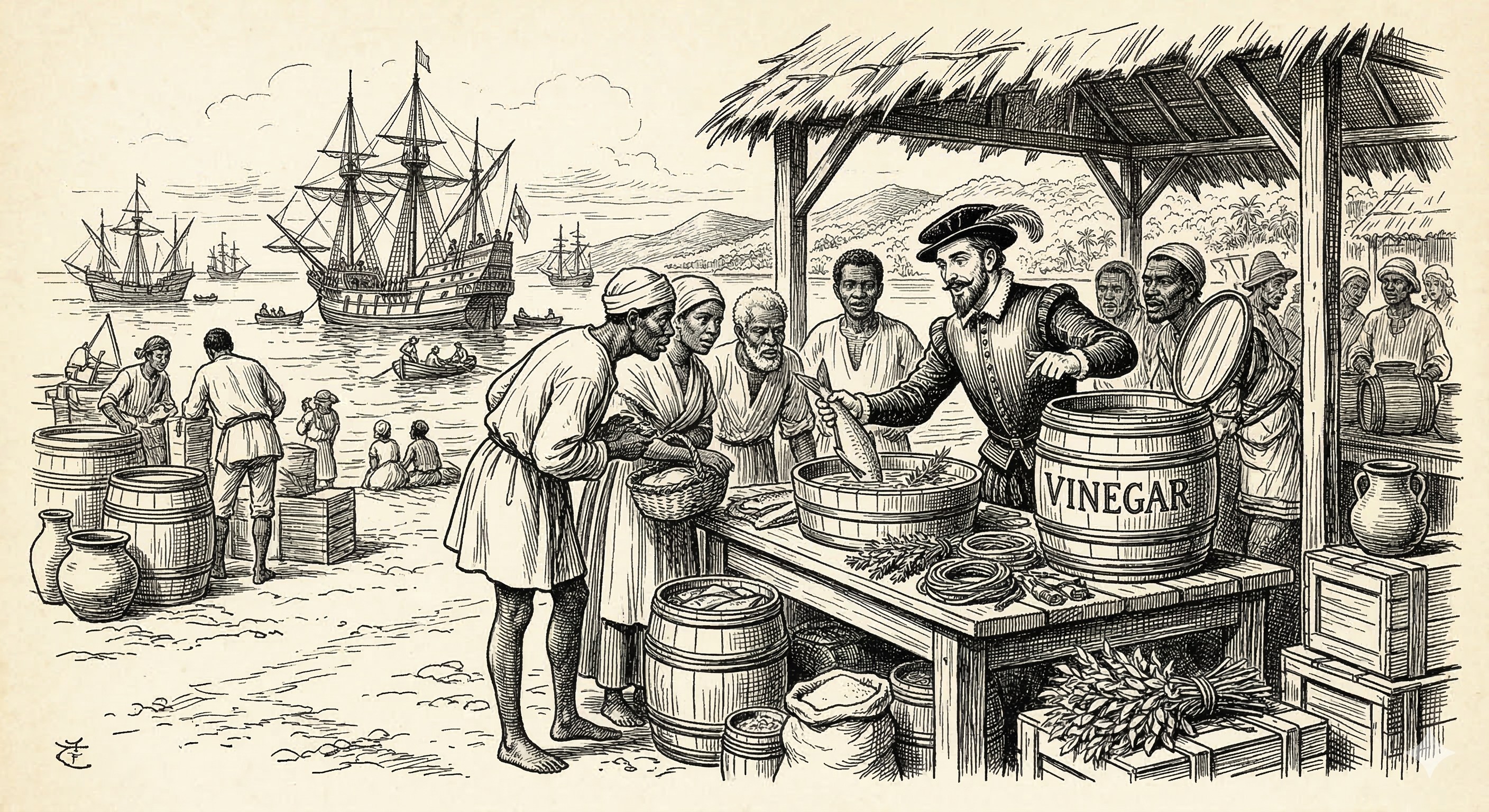
Escovitch fish traces its roots to the Spanish and Portuguese Jewish communities who settled in Jamaica in the 15th and 16th centuries. The technique — frying fish and then marinating it in a vinegar-based pickle — derives from the Spanish "escabeche," itself borrowed from the Arabic "al-sikbaj," a sweet-sour meat dish from medieval Persia. In an era before refrigeration, the acid in the vinegar acted as a preservative, keeping fried fish edible for days in the tropical heat. When Jewish merchants brought this method to the Caribbean, Jamaica's cooks transformed it entirely — adding scotch bonnet's fierce heat, allspice's warmth, and the brightness of thinly sliced onions and carrots.
Escovitch fish became especially tied to Good Friday, when Catholic tradition forbade meat — the fried snapper crowned with its tangy, spiced pickle became the centrepiece of the holiday table across the island. But its appeal quickly outgrew the calendar. Today it is eaten year-round, at fish markets, family tables, and roadside stalls, served with hard dough bread to soak up every last drop of that vinegar sauce.
What makes escovitch remarkable is its balance: the fish is fried to a crisp, then immediately doused in the cool, sharp pickle, the two textures and temperatures playing against each other in every bite. It is bold, precise, and unlike anything else in Caribbean cooking.